Skip to content
Science in Public
  • Home
  • About usExpand
    • Our team
    • Our portfolio
  • Our servicesExpand
    • Writing and editing
    • Communication support
    • One-to-one consulting
    • Video production
    • Media for conferences
  • Our clients
  • Media Training
  • National Science Week
  • Media releases
  • Newsletters
Contact
Science in Public
  • The Australia-Indonesia Centre

    Fighting the rise of non-communicable diseases starts with children and adolescents

    ByOperations 17 December, 20171 May, 2018

    Indonesia and Australia’s rising burden of non-communicable diseases (NCDs) is being tackled with a suite of projects designed to bring attention to risk factors early in life and improve overall health. The work, which is supported by The Australia-Indonesia Centre, focuses on three areas: tobacco use, mental health and improving communication between healthcare providers and…
    Read More Fighting the rise of non-communicable diseases starts with children and adolescentsContinue

  • Improving rail safety in Indonesia and Australia
    Media releases The Australia-Indonesia Centre

    Improving rail safety in Indonesia and Australia

    ByOperations 24 November, 201712 February, 2018

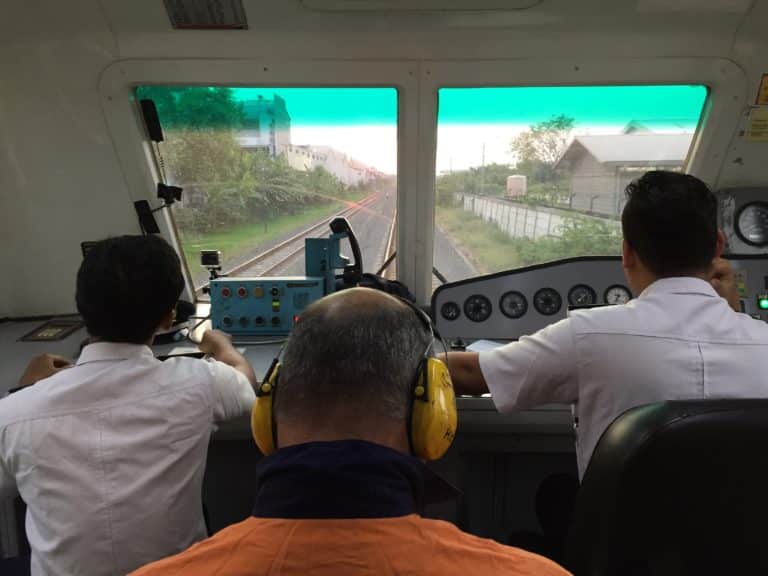
    The sweet spot for rail repair vs efficiency Computer models to predict how railcars will respond to different track conditions are being developed by Indonesian and Australian researchers, to improve rail safety and efficiency in both countries. They’ve already created a successful model for passenger carriages, which has been validated against the performance of trains…

    Read More Improving rail safety in Indonesia and AustraliaContinue

  • The Australia-Indonesia Centre

    Stunted, obese and unhealthy: can cocoa help rebuild impoverished communities?

    ByOperations 17 October, 20171 May, 2018

    In West Sulawesi, 400,000 families depend on cocoa farming. But downturns in price and production are pushing families into poverty, with profound implications for public health. Fifty per cent of children stunted, 90 per cent of males smoking, and an increasing number of obese women. These were the results from a health and livelihood survey…

    Read More Stunted, obese and unhealthy: can cocoa help rebuild impoverished communities?Continue

  • The Australia-Indonesia Centre

    Renewable ‘alternatives’ cheapest option for Australia, Indonesia

    ByOperations 21 September, 20171 May, 2018

    Electricity from photovoltaics and wind are likely the cheapest options for large-scale energy generation in both Australia and Indonesia, according to research from the Australian National University (ANU) and Institut Teknologi Bandung, supported by The Australia-Indonesia Centre. “Reductions in the cost of photovoltaics and wind, coupled with developments in high-voltage direct current (HVDC) and off-river…

    Read More Renewable ‘alternatives’ cheapest option for Australia, IndonesiaContinue

  • Smarter electrification: providing energy isn’t enough 
    The Australia-Indonesia Centre

    Smarter electrification: providing energy isn’t enough 

    ByOperations 31 July, 201712 February, 2018

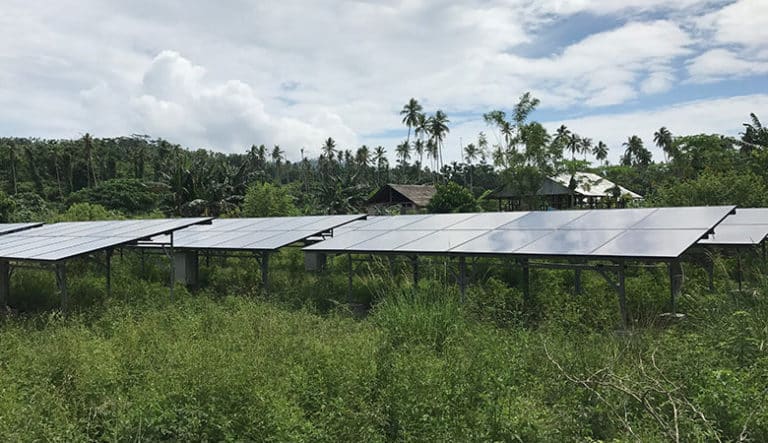
    Four years ago life in Pulau Bau, a village on a tiny island off North Maluku in Indonesia, was transformed. The community was supplied with electricity via small-scale diesel generators and a state-of-the-art solar energy system with battery backup. Every house was receiving some electricity—not a lot, but some. But early in 2017 the system…

    Read More Smarter electrification: providing energy isn’t enough Continue

  • What could giant batteries mean for Indonesian energy?
    The Australia-Indonesia Centre

    What could giant batteries mean for Indonesian energy?

    ByOperations 25 July, 201725 July, 2017

    In response to blackouts and concerns over energy supply, South Australia is getting the world’s largest lithium-ion battery. What exactly does this mean for the future of energy in Australia, and could such an approach work for Indonesia? “The announcement of the Neoen and Tesla investment in a 100MW/129MWh battery adjacent to the Hornsdale wind-farm…

    Read More What could giant batteries mean for Indonesian energy?Continue

  • Radar-in-a-suitcase makes bridges safer
    Australian science stories Stories of Aus Sci The Australia-Indonesia Centre

    Radar-in-a-suitcase makes bridges safer

    ByOperations 3 July, 2017

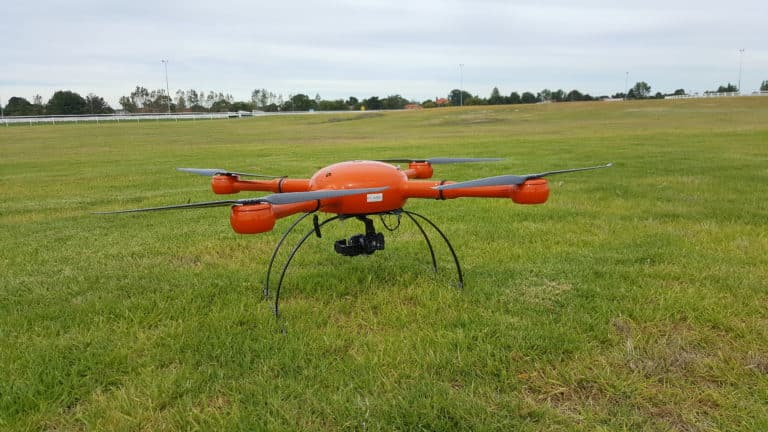
    Assessing ageing bridges just got safer and easier, thanks to a high-tech radar device that fits inside a suitcase. Developed by Dr Lihai Zhang of The University of Melbourne as part of a collaborative research project supported by The Australia-Indonesia Centre, the IBIS-S radar technology can scan a bridge in 15 minutes from a kilometre…

    Read More Radar-in-a-suitcase makes bridges saferContinue

  • Detecting high risk pregnancies in Indonesia
    The Australia-Indonesia Centre

    Detecting high risk pregnancies in Indonesia

    ByOperations 23 January, 20174 July, 2017

    Women in Indonesia were 21 times more likely to die from childbirth than women in Australia in 2015. Many pregnant women in Indonesia, particularly in remote areas, do not regularly visit health clinics and so complications are not detected and dealt with early enough.

    Read More Detecting high risk pregnancies in IndonesiaContinue

  • Media releases The Australia-Indonesia Centre

    Breeding mosquitoes; turning Aussie wheat into Indonesian exports; connecting land and sea; the first 1,000 days of life

    ByOperations 23 August, 201612 February, 2018

    Today in Surabaya, the third Indonesia-Australia Research Summit discusses research to change lives, including: What happens when islands and remote communities get electricity? How does 24/7 power change families, businesses, and hierarchies? Families hatching and releasing mosquitoes to fight dengue Joint competitive advantage – working together to build our economies Australian wheat becomes Indonesian noodles for global export…

    Read More Breeding mosquitoes; turning Aussie wheat into Indonesian exports; connecting land and sea; the first 1,000 days of lifeContinue

  • Ports that work; saving children’s lives; water smart cities and more
    Media releases The Australia-Indonesia Centre

    Ports that work; saving children’s lives; water smart cities and more

    ByOperations 22 August, 201624 August, 2016

    Today in Surabaya, the 3rd Indonesia-Australia Research Summit with research to change lives including: Making ports that work with rail, road, and the surrounding communities Could vitamin D reduce child deaths? Designing the coolest and most energy-efficient tropical houses What do children learn about diet and nutrition on the street: from advertising to school posters…

    Read More Ports that work; saving children’s lives; water smart cities and moreContinue

Page navigation

1 2 3 Next PageNext

© 2026 Science In Public - WordPress Theme by Kadence WP

Linkedin Bluesky Facebook Twitter
  • Home
  • About us
    • Our team
    • Our portfolio
  • Our services
    • Writing and editing
    • Communication support
    • One-to-one consulting
    • Video production
    • Media for conferences
  • Our clients
  • Media Training
  • National Science Week
  • Media releases
  • Newsletters