Frog saunas and spa treatments fight deadly fungus
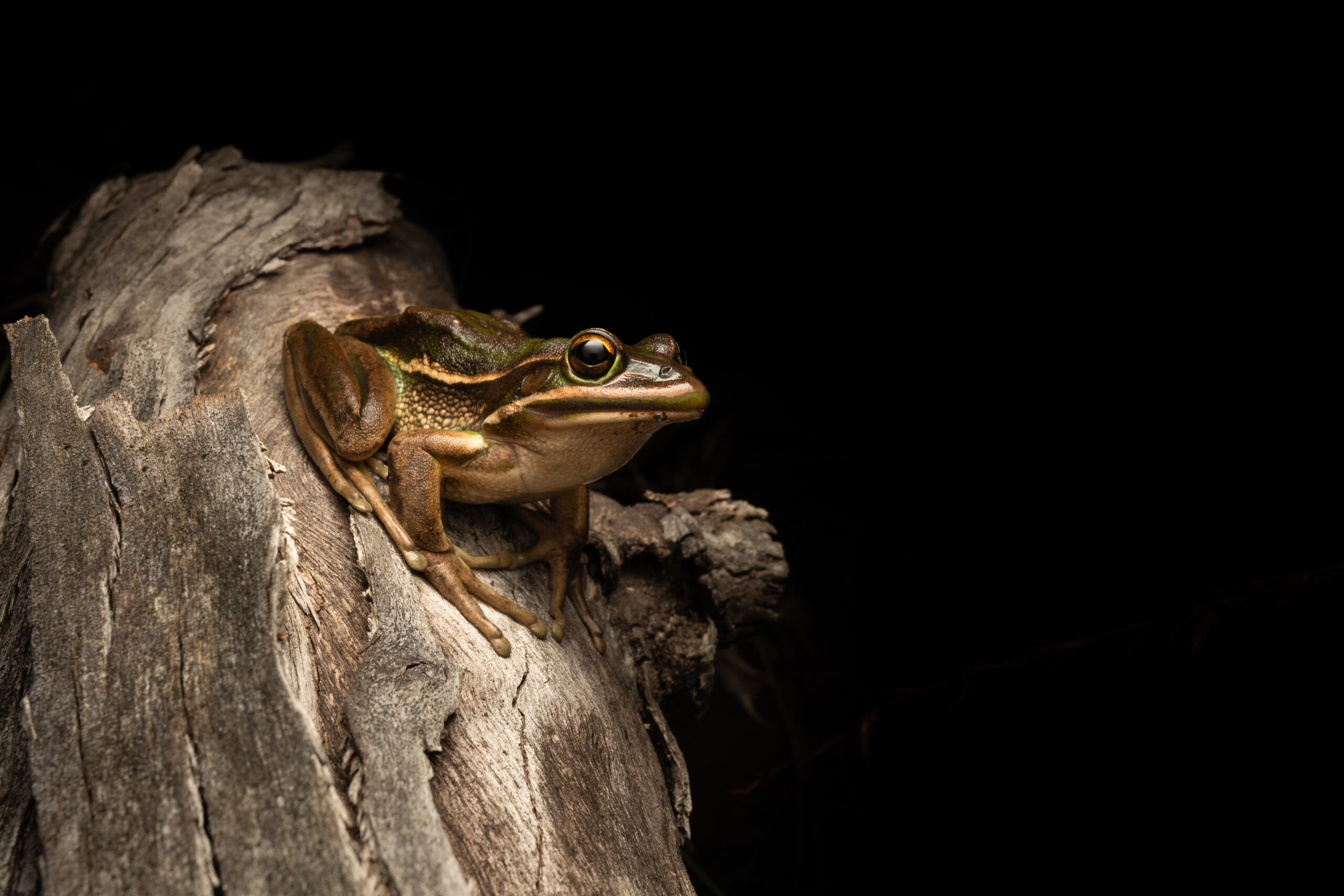
- Green and golden bell frogs, renowned for a mating call that sounds like a motorbike changing gears, have fallen silent in Canberra since the 1980s.
- But that’s about to change. A Science Week event, organised by Frogwatch ACT and Region, raised national media attention and a spike in volunteers to help researchers reintroduce the ‘locally extinct’ species to the capital.
- Around 180 perspex-encased brick saunas and salt-bath satellite ponds are being constructed in 15 wetlands around Canberra, with reintroduction trials commencing November 2025.
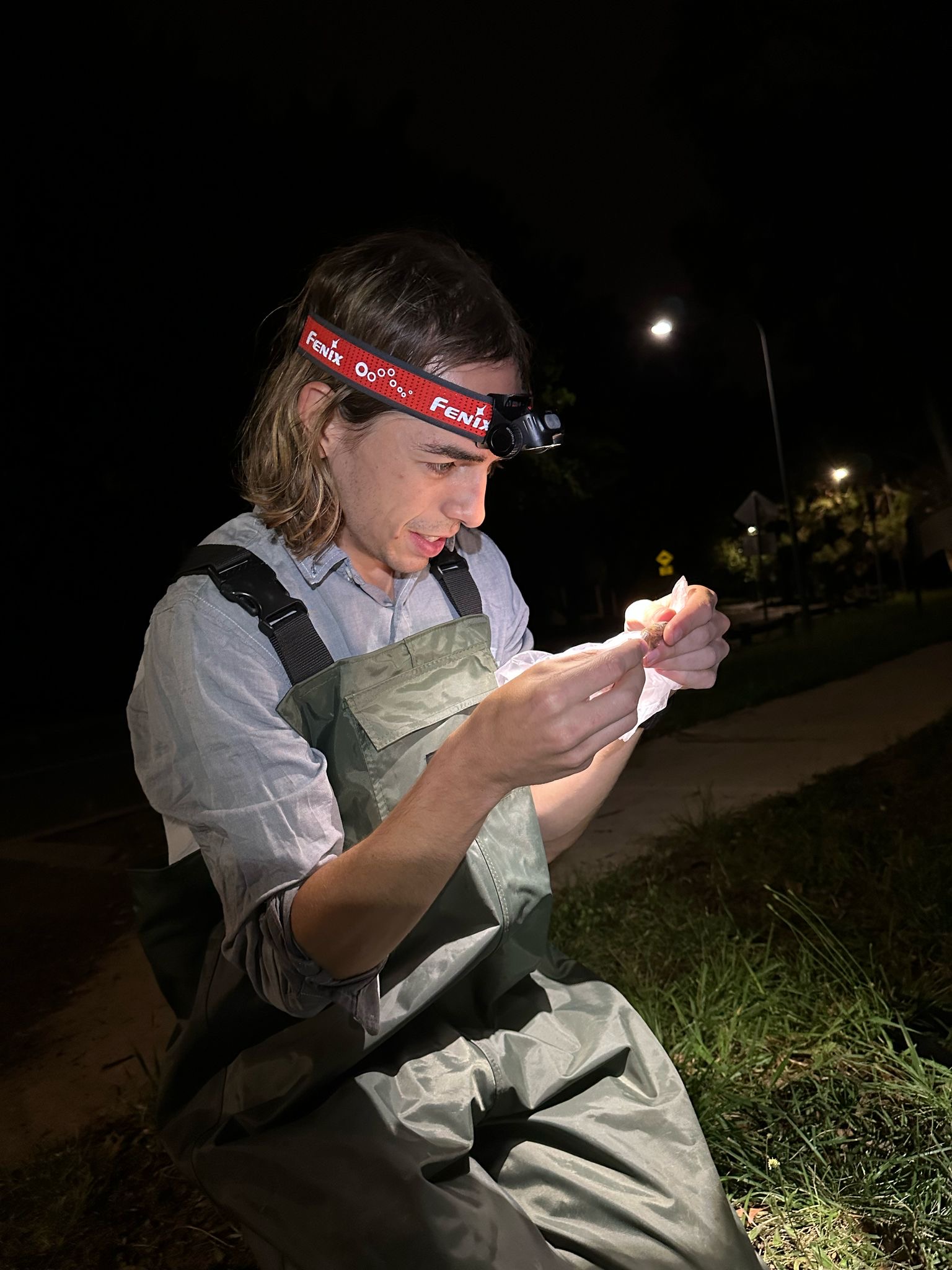
“Publicity and positive media coverage secured through our involvement in National Science Week has stimulated public interest and volunteer sign-ups that exceeded all expectations…”
– Dr Jarrod Sopniewski, University of Canberra
For many researchers, like conservation biologist Dr Jarrod Sopniewski, the dream of tireless hours in the lab translating into national headlines and public support, can seem unattainable.
Jarrod watched that dream turn to reality through participation in National Science Week 2025.
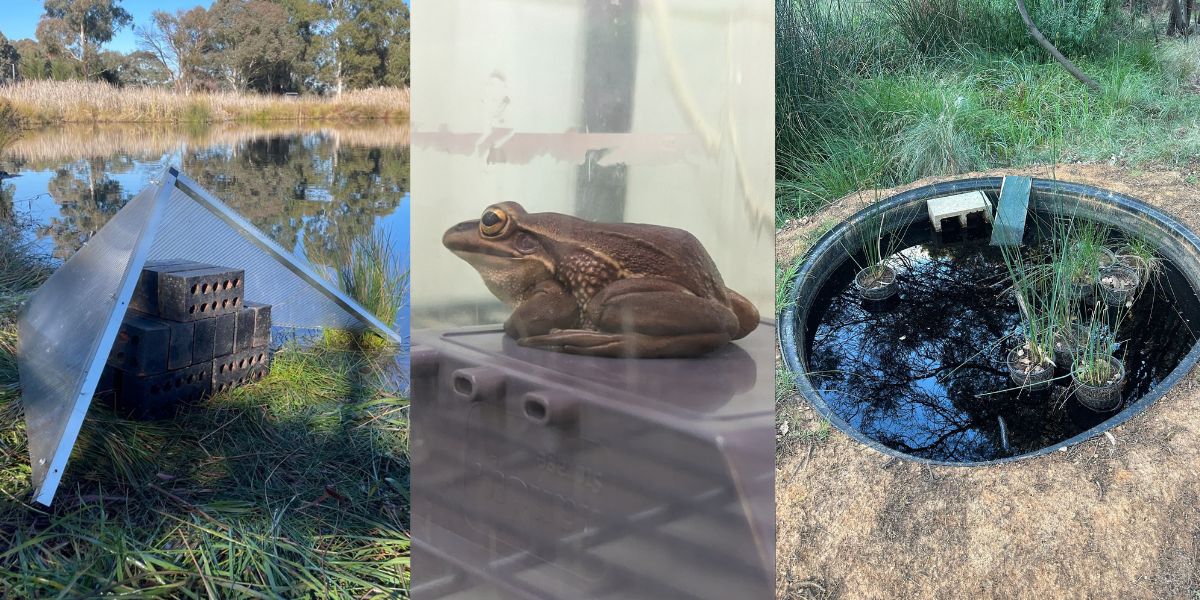
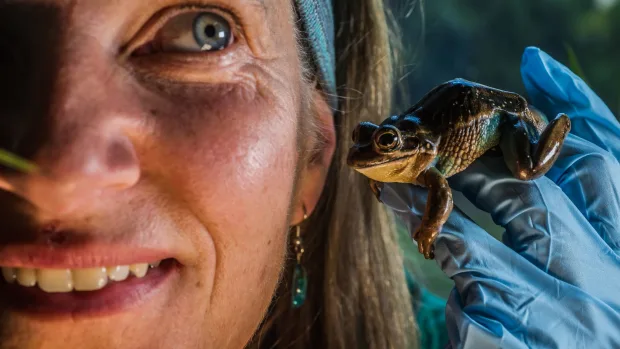
He and other University of Canberra researchers teamed up with FrogWatch ACT and Region to engage the public in a novel project – using frog saunas and spa treatments – to give green and golden bell frogs a fighting chance at survival against the deadly chytrid fungus.

The ‘locally extinct’ species will be reintroduced to the capital, starting November.
“I got the privilege of presenting at the Science Week event which provided an excellent opportunity to engage with the general public in an accessible manner, from young children to elderly people,” says Jarrod of a DIY frog sauna workshop and twilight wetlands walk.
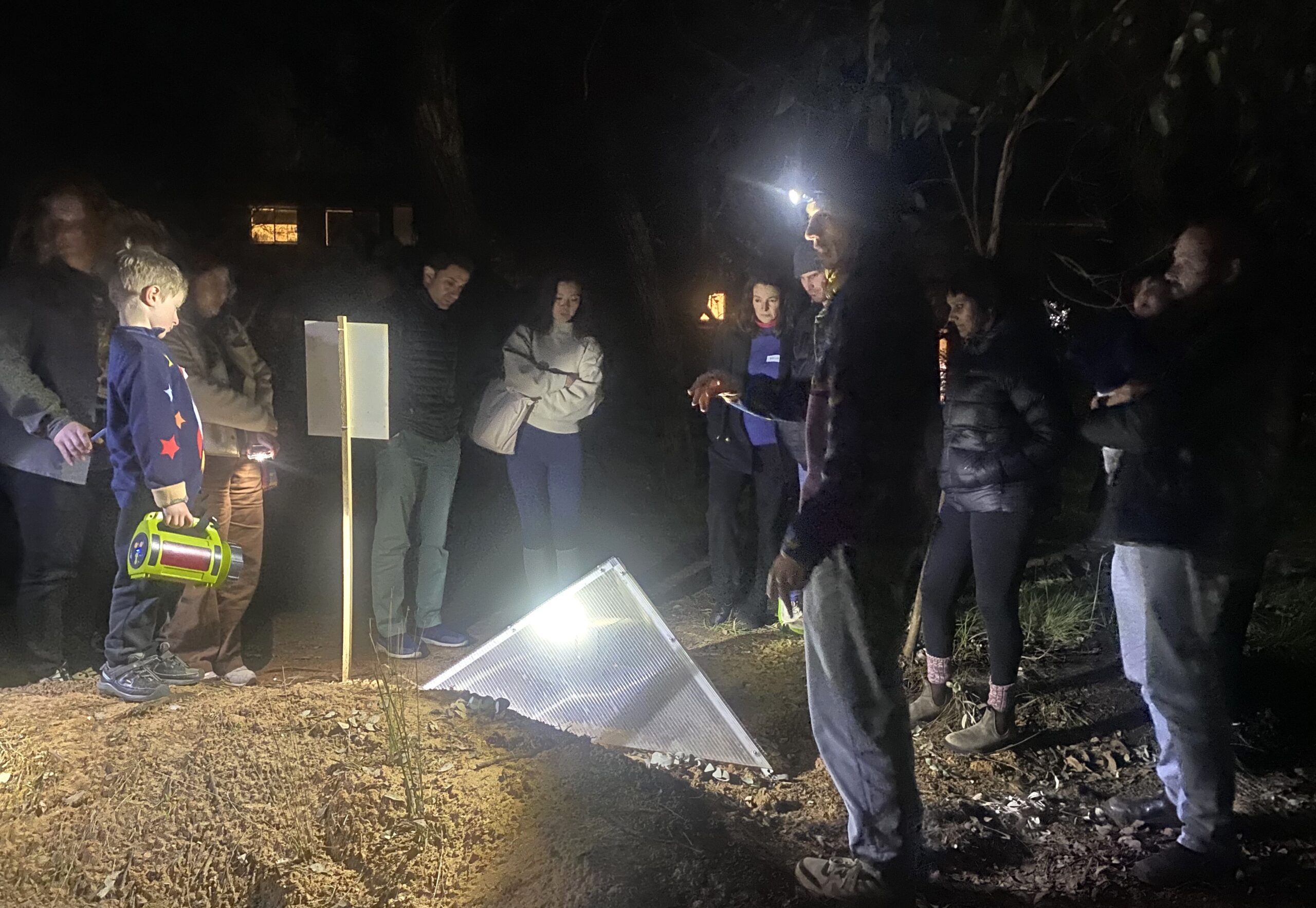
The free Science Week event was made possible thanks to a seed grant from Inspiring Australia ACT to FrogWatch ACT and Region. It was timed ahead of an Australian Research Council funded research project ramping up and requiring volunteers.
“We plan to release frogs between now and Science Week 2026,” Jarrod said.
“Our project is a world first using a three-pronged approach to test what is most effective: saunas, salted satellite ponds and pre-release immunisation.”
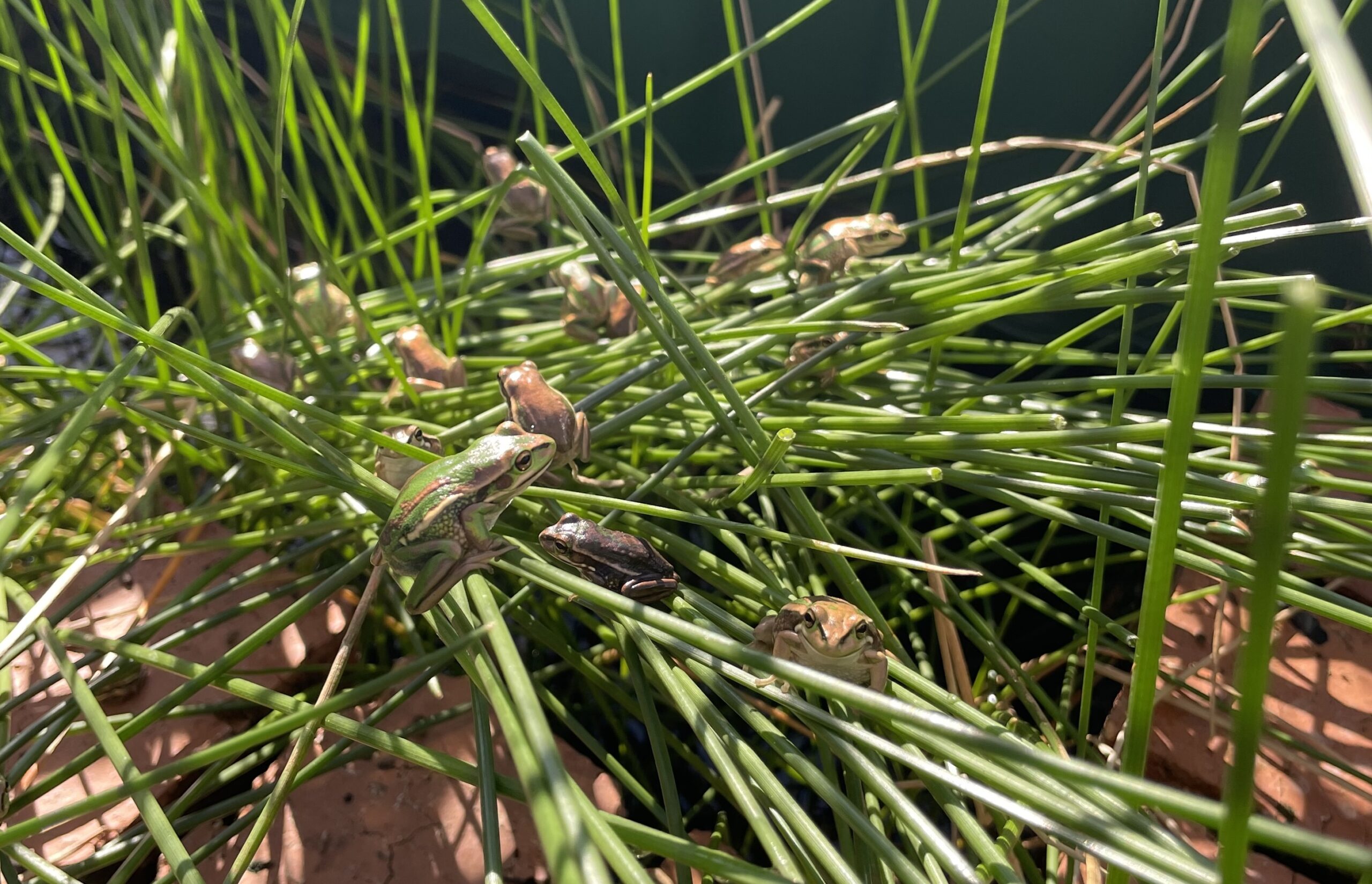
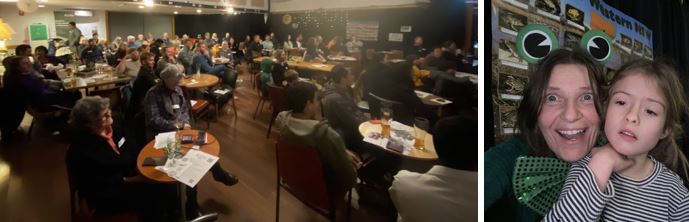
The event, ‘Science in and out of the pub: frogs, fungus and funky metals’, attracted a ‘full house’ of around 100 participants, and secured media coverage, including
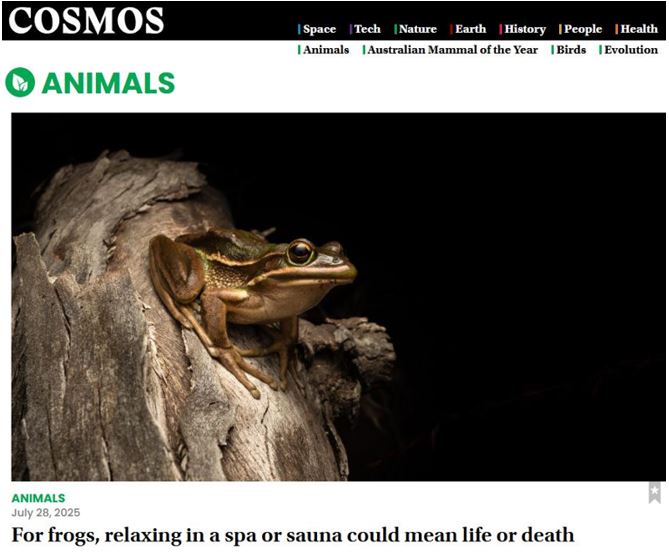
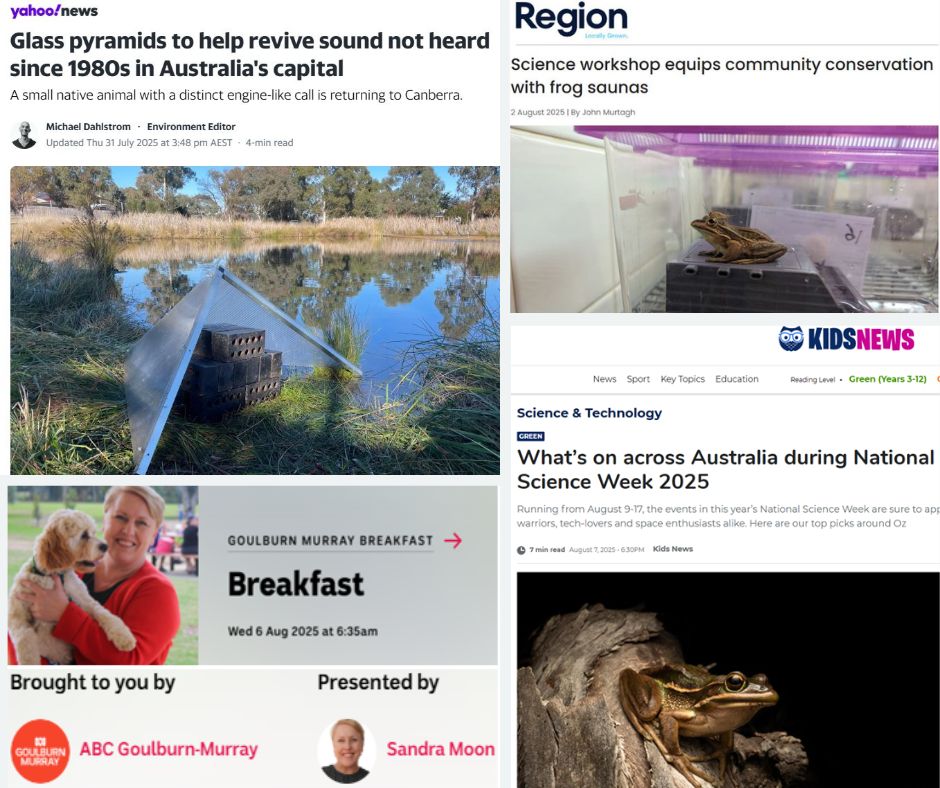
- COSMOS magazine
- Yahoo News Australia
- KidsNews / News.com.au
- ABC Radio
- Region Canberra
Jarrod said media coverage ahead of the event greatly contributed to the excellent turnout.
“We are also seeing increased public engagement, with 20 new signups to our project mailing list and interest in volunteering opportunities,” he added.
“I checked the following morning, and our mailing list had increased by about 30 per cent.
“Without the help provided by Science in Public, we would not have had any of the media engagement we received – it simply wasn’t on our radar at the time but was massively appreciated.”
While University of Canberra researchers were not involved in registering or organising the National Science Week event, Jarrod said:
“My biggest advice to anyone wanting to participate in Science Week is to say ‘yes’ to all opportunities provided. Media engagement prior to the event was perhaps the biggest positive, so early registration and engagement with Science in Public to maximise these media opportunities is hugely encouraged.”
ACT Frogwatch and Region coordinator Anke Maria Hoefer said the event involved lots of planning and was ‘super fun’.
She hopes to secure funding to run ‘frog-tastic activities’ during National Science Week 2026, potentially including guided night walks to wetlands involved in the green and golden bell frog reintroduction trials.
Stay tuned. National Science Week 2026 runs from Saturday 15 to Sunday 23 August.
For news and updates, including how and when to register your National Science Week 2026 events, apply for grants and more, visit: www.scienceweek.net.au.