Images may be used by the media, provided credit is given to the photographer.
For hi-res versions please click on the photo and then right click to download the file.
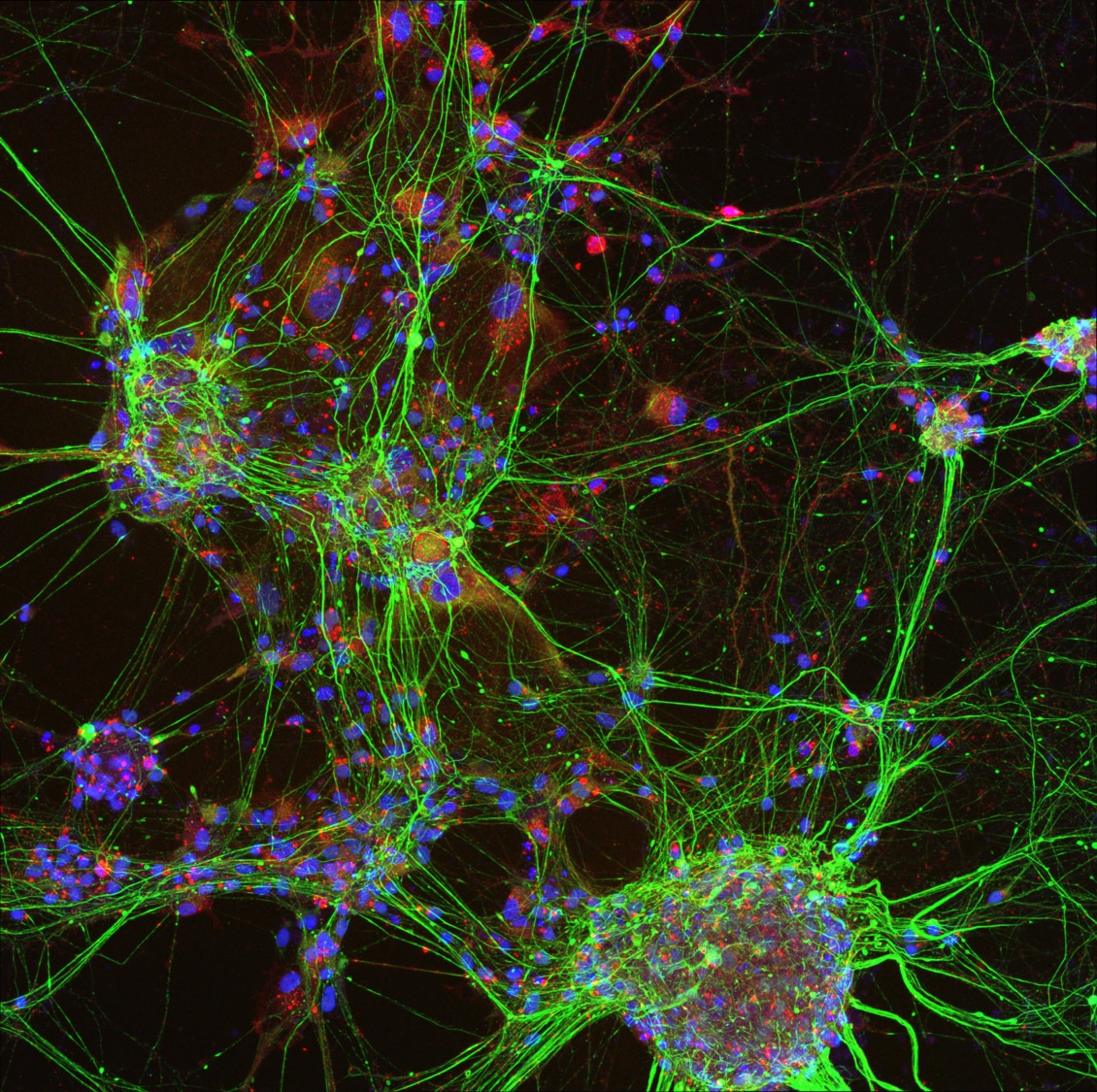
Human forebrain neurons derived from induced pluripotent stem cells and infected with Australian bat lyssavirus, a type of rabies found in Australian bats. (Credit: Vinod Sundaramoorthy / ASSCR)
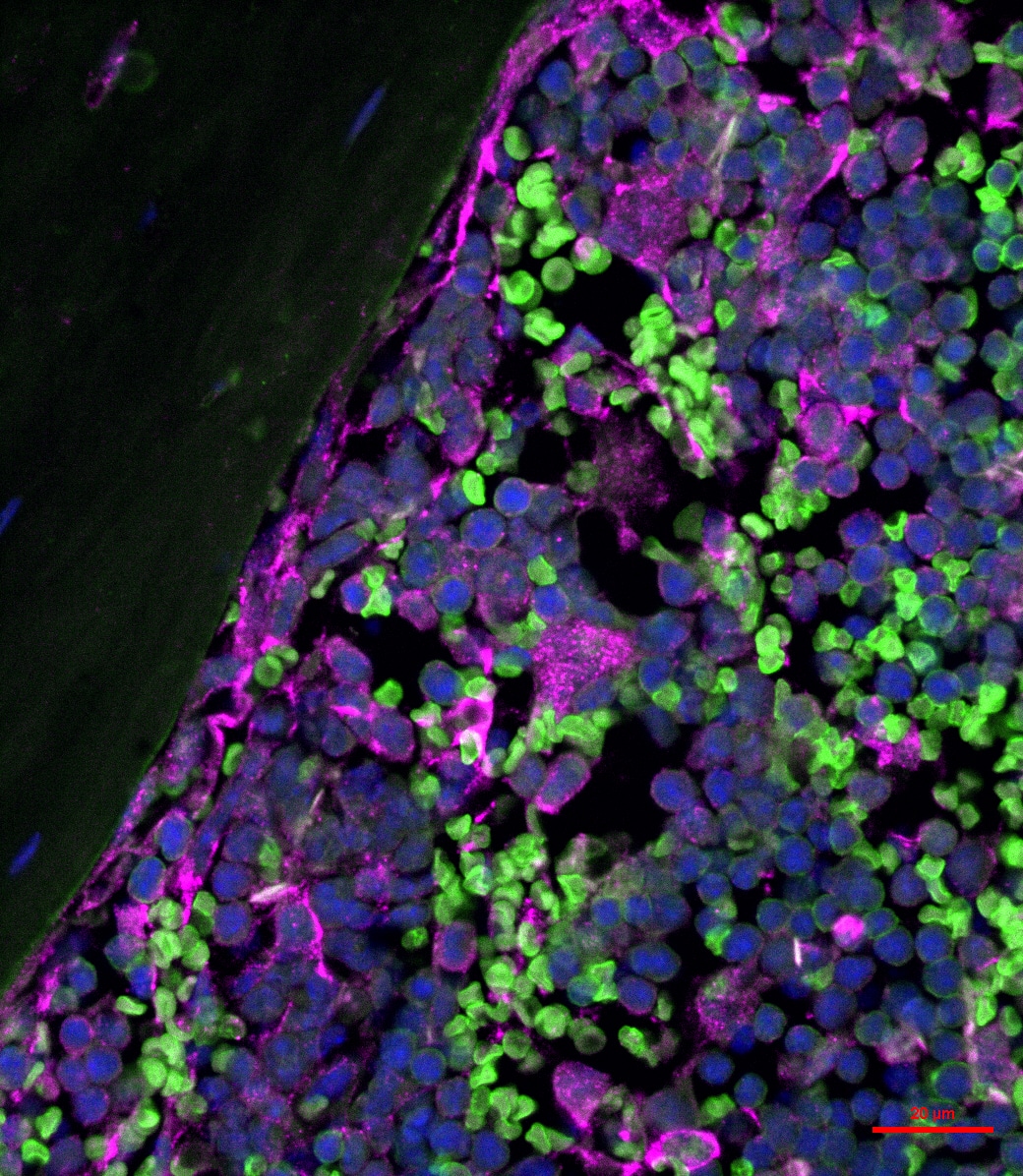
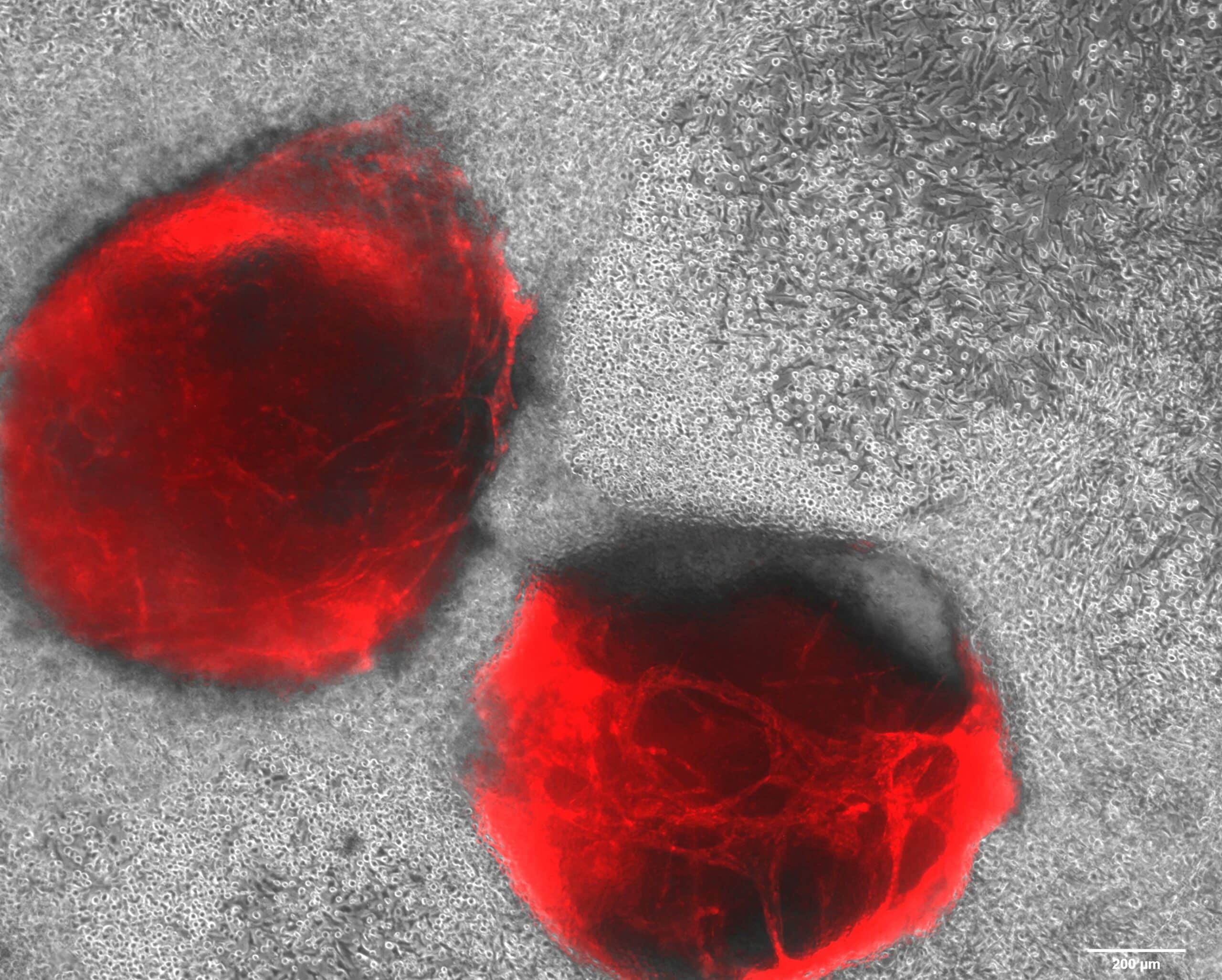
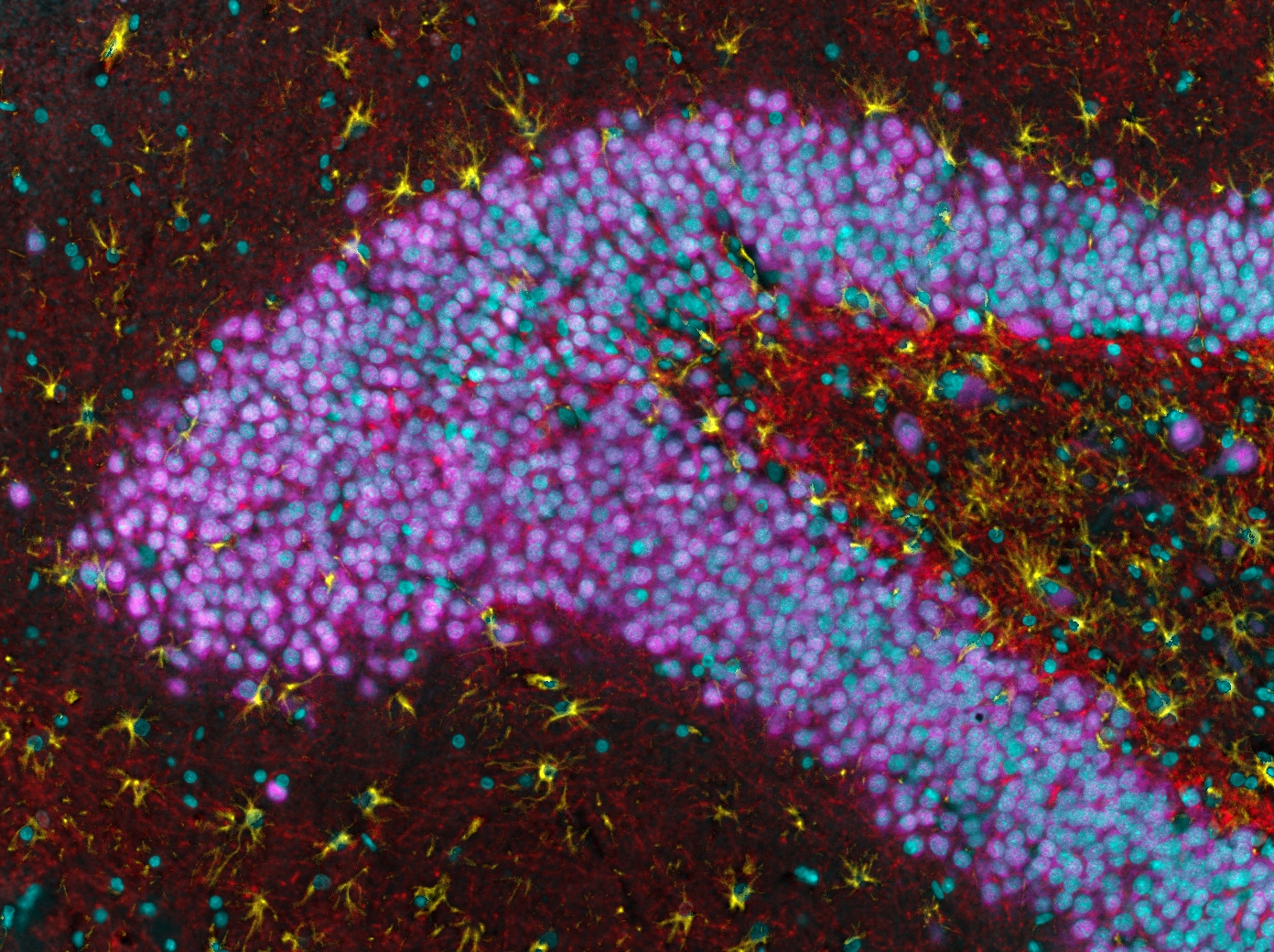
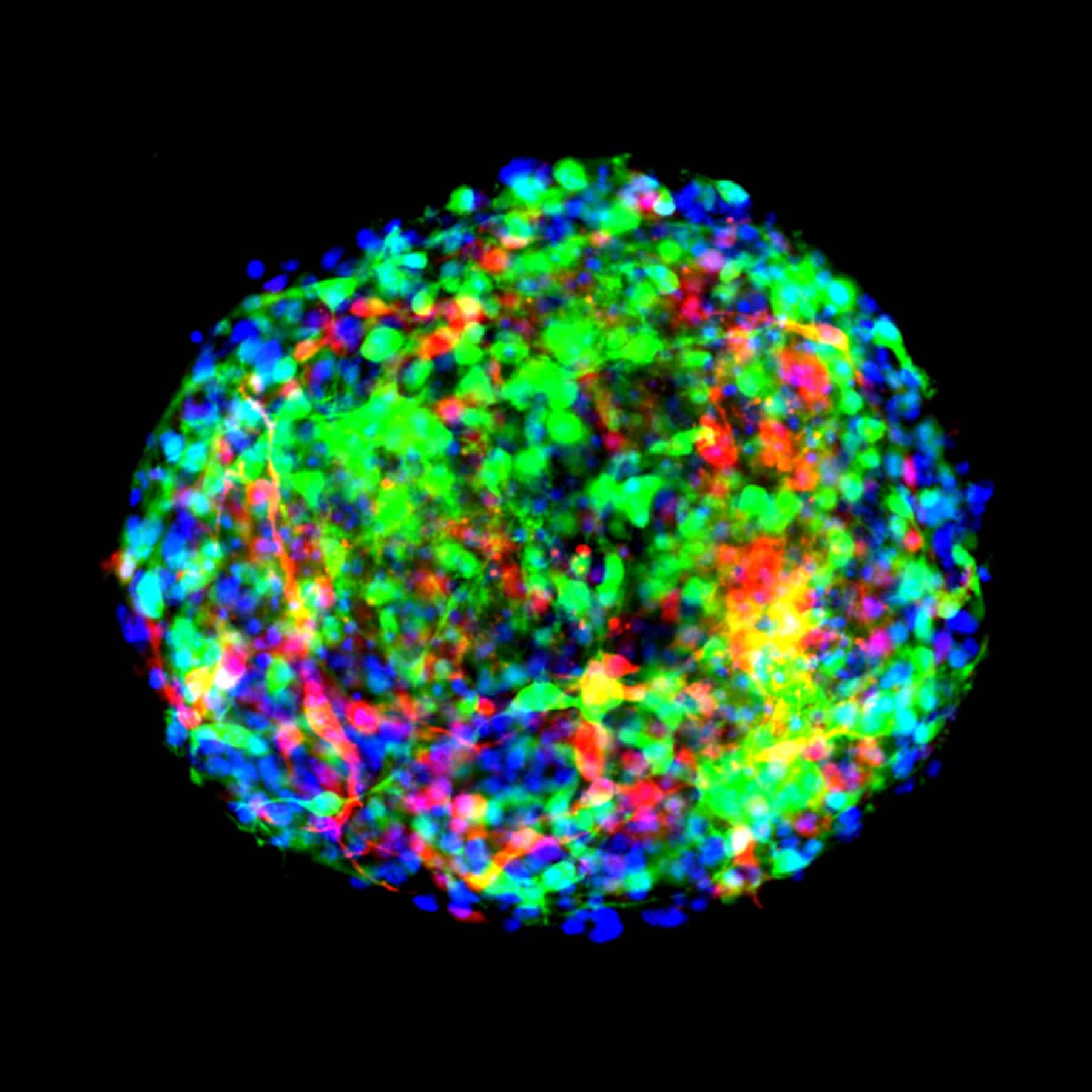
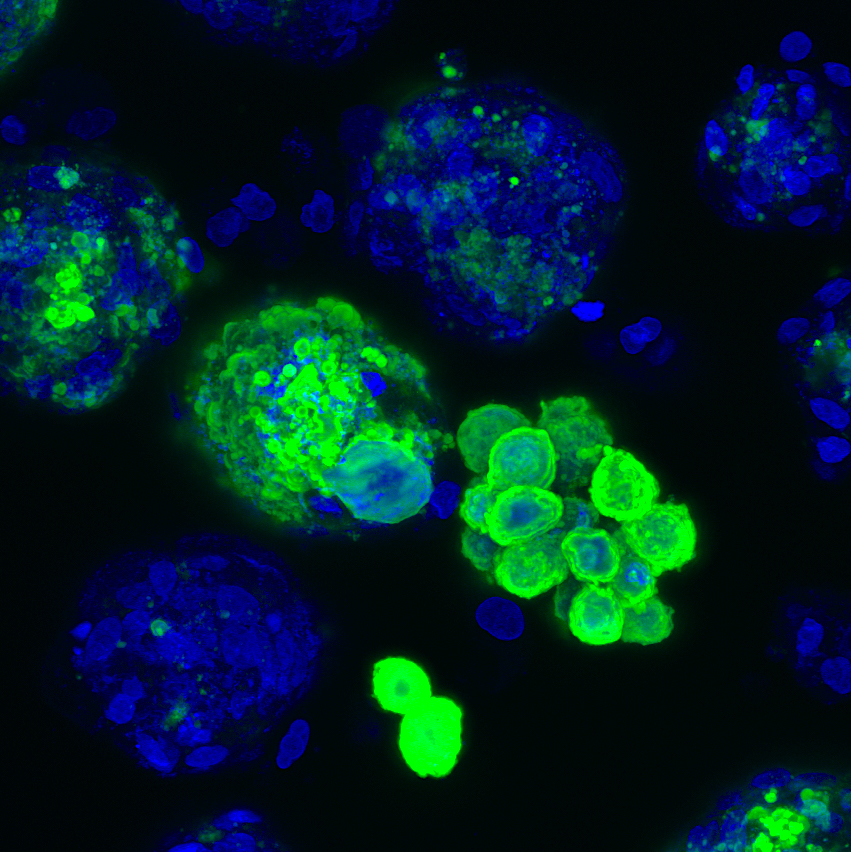
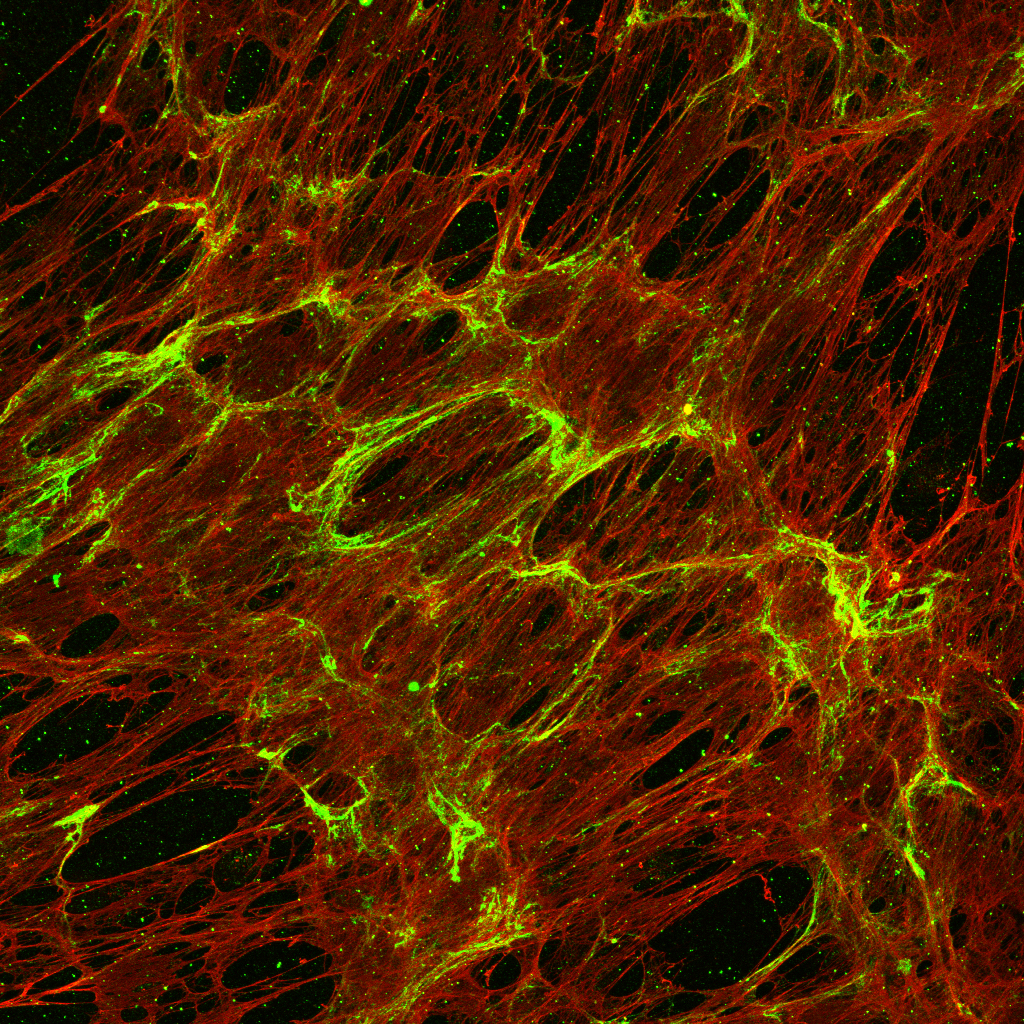
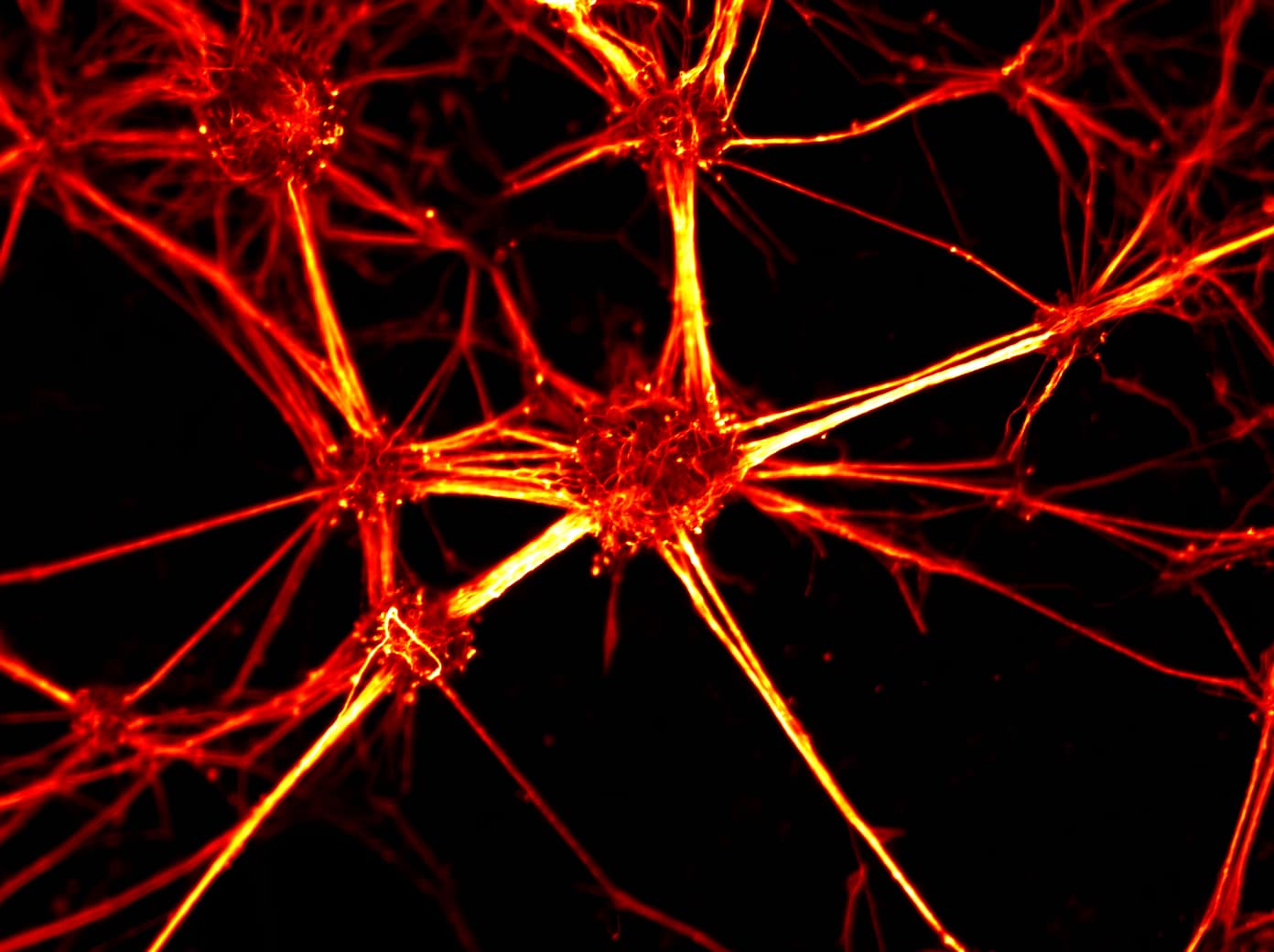
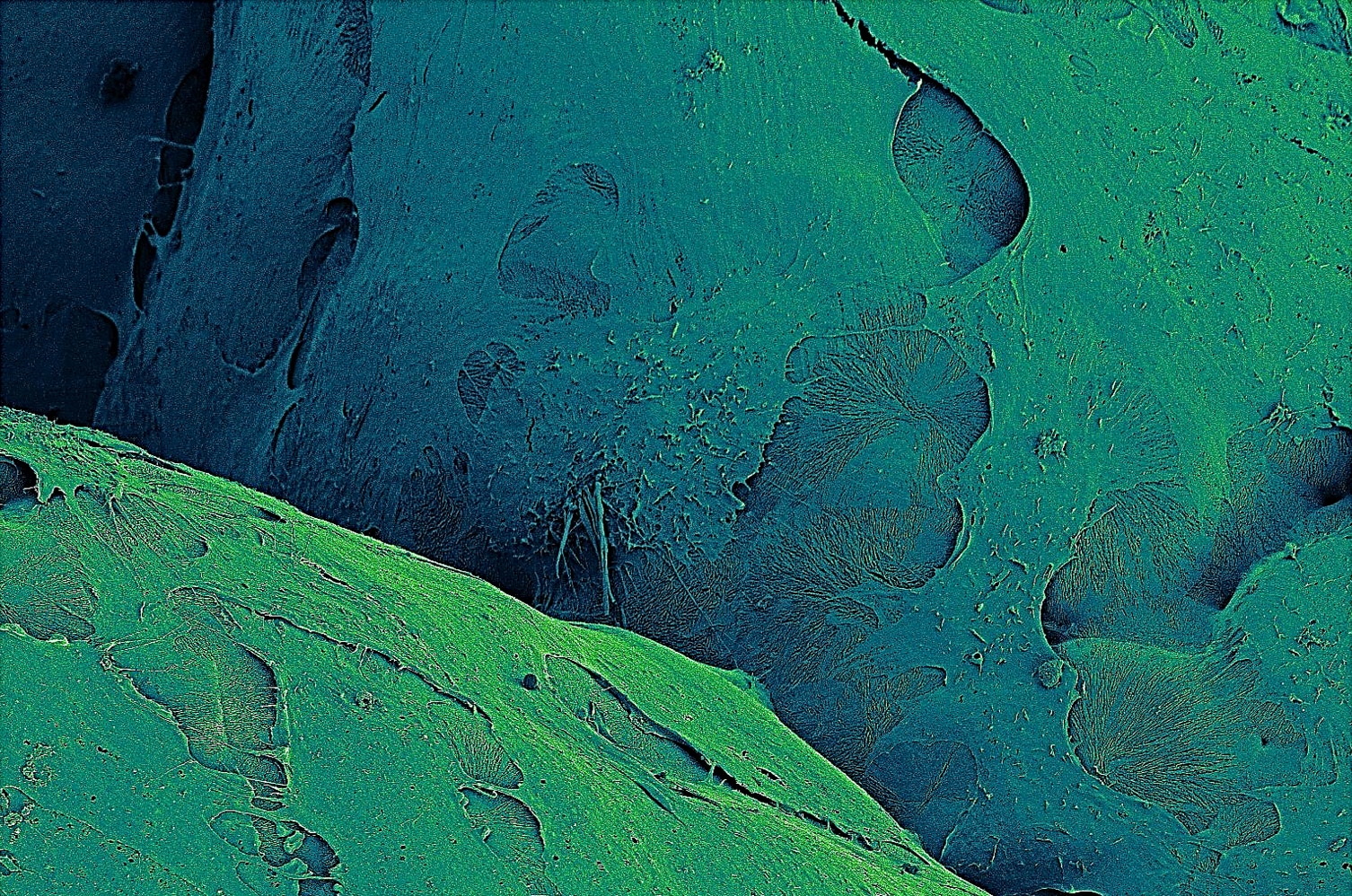
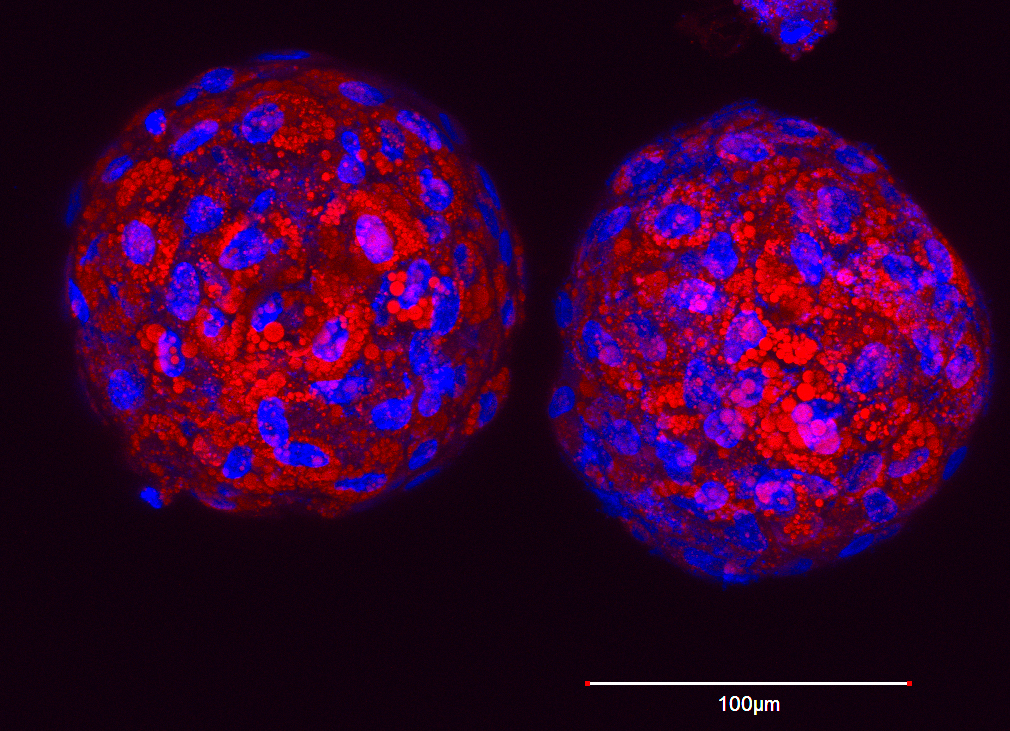
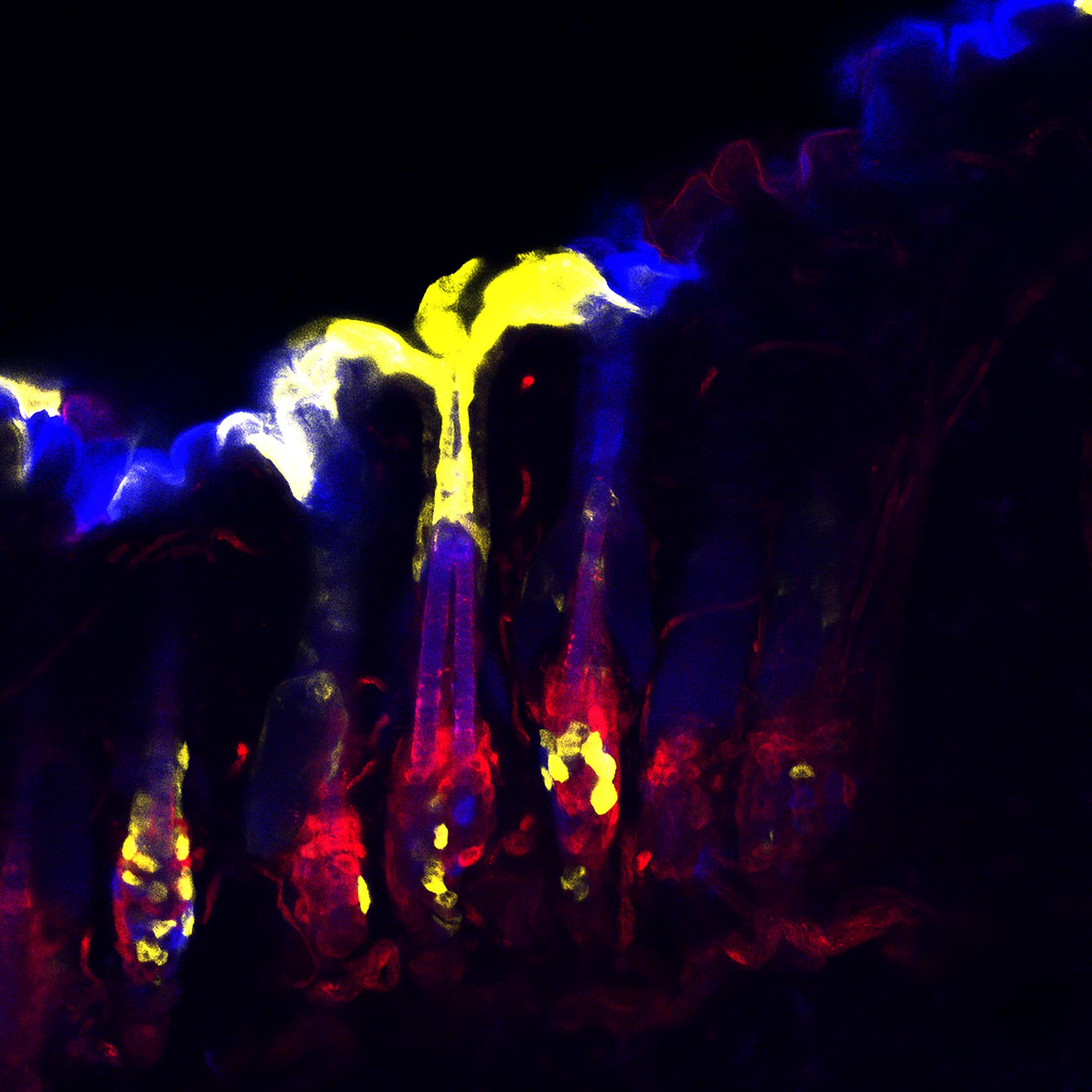
A magnified section of mouse bone marrow that has received a xenograft of human mesenchymal stem cells. Mesenchymal stem cells are found in the body’s connective tissue. (Credit: Bianca Nowlan / ASSCR)Two embryoid bodies—aggregates of pluripotent cells or cells which can turn into multiple cell types—derived from human embryonic stem cells, bleeding in a dish. (Credit: Ana Rita Leitoguinho / ASSCR)Studying multiple biomarkers—which indicate whether particular biological processes are occurring—in the brain’s dentate gyrus, a region of the hippocampus. Such studies help us evaluate the clinical potential of stem cell therapies. (Credit: An Truong/ASSCR)This fluorescent ball of cells is a neurosphere, or cluster of neural stem cells. It has been formed from two genetically distinct populations of mouse neural stem cells, and has the potential to turn into other neural cells. (Credit: Claire Homan / ASSCR)When mesenchymal stem cells are induced to form new bone cells, some cells will undergo apoptosis or programmed cell death and fragment. (Credit: Eman Othman Mossad/ASSCR)Decellularised extracellular matrix proteins are highlighted by fluorescent labels. The proteins are produced by human bone marrow mesenchymal stem cells. (Credit: Gina Kusuma / ASSCR)A six-week-old neuronal network, derived from human embryonic stem cells, shows the intricacy of nodes branching and connecting to other nodes. It’s a veritable spider’s web of information pathways. (Credit: Jarmon Lees / ASSCR)Neurons derived from human embryonic stem cells being used to model Parkinson’s disease in the lab. (Credit: Joan Ho / ASSCR)Twenty-day-old endometrial mesenchymal stem cells attached to a 3D-printed scaffold. (Credit: Kallyanashis Paul / ASSCR)Fat microtissues produced from human mesenchymal stem cells in bone marrow. With their perfect symmetry and abundance of glorious fat droplets, they are fascinating to look at! (Credit: Mike Doran / ASSCR)Tracing generations of cloned skin stem cells using different coloured fluorescent proteins. (Credit: Edwige Roy / ASSCR)
Australia’s leadership in quantum science is no accident. It is the product of decades of bipartisan Federal Government investment in research, matched with sustained support for the critical infrastructure that enables discovery to move from theory to application. At the heart of this effort is the National Collaborative Research Infrastructure Strategy (NCRIS), a long-term commitment to…
Experts available to talk about tinnitus, their family experience, and how new tools can make a difference for millions of people. A free trial of the latest evidence-based therapies is available for Tinnitus Awareness Week. The seven-day challenge incorporates the latest research from Newcastle University in the UK along with research from Auckland University, the…
Who will care for me as I age? Who will care for my children so I can go to work? Who will support me so that I can participate fully in life? How can we help the carers? How can we guarantee quality and safety of care into the future? Can technology improve care and reduce costs?
By 2100 Australian and global coral reef communities will be slow to recover, less complex, and dominated by fleshy algae, as high carbon dioxide changes ocean chemistry. An international study published today in Communications Biology has used unique coral reefs in Papua New Guinea to determine the likely impact of ocean acidification on coral reefs in the face…
Monday 10 November 2025 Winners of the National Stem Cell Foundation of Australia’s Metcalf Prizes announced today Scientists available for interviews, see below for contact details Two researchers using stem cells to study schizophrenia, degenerative diseases and brain cancer are winners of the 2025 Metcalf Prizes for Stem Cell Research, awarded by the National Stem…
Dr Maria Di Biase has created a ‘brain bank’ of schizophrenia: blobs of brain cells from 100 patients, growing in the lab. She’s using these brain organoids to develop urgently needed new approaches to diagnosis and treatment. Schizophrenia affects about one in 300 people worldwide. It usually manifests in adolescence. People with schizophrenia lose an…