Skip to content
Science in Public
  • About usExpand
    • Our team
    • Our clients
    • Our portfolio
  • Our servicesExpand
    • Writing and editing
    • Communication support
    • One-to-one consulting
    • Video production
    • Media for conferences
  • Media Training
  • Media releases
  • National Science Week
  • Newsletters
Contact
Science in Public
  • How galactic winds stopped star formation. Strange radio emissions. Hercules stars and the evolving Milky Way. Find gravitational waves with pulsar timing.
    Astronomical Society of Australia (ASA) Media releases

    How galactic winds stopped star formation. Strange radio emissions. Hercules stars and the evolving Milky Way. Find gravitational waves with pulsar timing.

    8 July, 202523 September, 2025

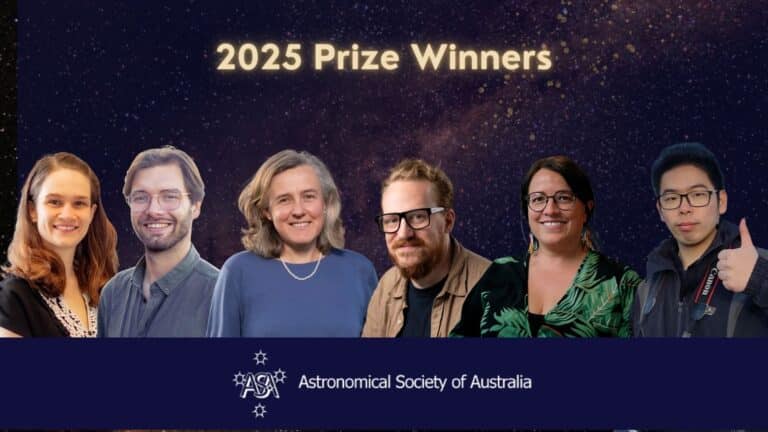
    National recognition for astronomers from Sydney, Canberra, Melbourne and Perth. The Astronomical Society of Australia (ASA) honours six astronomers at its Annual Scientific Meeting in Adelaide this week. “Our 2025 prize winners are investigating how galaxies form and evolve, and developing new tools to explore the cosmos. They are working with some of the most…

    Read More How galactic winds stopped star formation. Strange radio emissions. Hercules stars and the evolving Milky Way. Find gravitational waves with pulsar timing.Continue

  • ASTRO 3D Media releases

    Too much heavy metal stops stars producing

    11 January, 202220 September, 2022

    Stars evolve according to the elements they manufacture Stars are giant factories that produce most of the elements in the Universe – including the elements in us, and in the Earth’s metal deposits. But what stars produce changes over time. Two new papers published in MNRAS shed light on how the youngest generation of stars…

    Read More Too much heavy metal stops stars producingContinue

  • ASTRO 3D Media releases

    At cosmic noon, puffy galaxies make stars for longer

    3 February, 20212 March, 2021

    Galaxies with extended disks maintain productivity, research reveals Image, video, GIFs Paper details, authors and affiliations More about ASTRO 3D Media release below Massive galaxies with extra-large extended “puffy” disks produced stars for longer than their more compact cousins, new modelling reveals. In a paper published in the Astrophysical Journal, researchers led by Dr Anshu…

    Read More At cosmic noon, puffy galaxies make stars for longerContinue

  • ASTRO 3D Media releases

    Blinded by the light no more: simulations show NASA’s James Webb Telescope will reveal hidden galaxies

    15 October, 202029 January, 2021

    Images Additional Information Media release below Australian researchers find ways to overcome the blinding glare of quasars The telescope, due to launch in late 2021, is the largest, most powerful and complex space telescope ever built. Two new studies led by Madeline Marshall from Australia’s University of Melbourne and the ARC Centre of Excellence in…

    Read More Blinded by the light no more: simulations show NASA’s James Webb Telescope will reveal hidden galaxiesContinue

  • ASTRO 3D Media releases

    Spin doctors: Astrophysicists find when galaxies rotate, size matters

    16 November, 201919 February, 2020

    Sky survey provides clues to how they change over time. The direction in which a galaxy spins depends on its mass, researchers have found. A team of astrophysicists analysed 1418 galaxies and found that small ones are likely to spin on a different axis to large ones. The rotation was measured in relation to each…

    Read More Spin doctors: Astrophysicists find when galaxies rotate, size mattersContinue

© 2026 Science in Public - WordPress Theme by Kadence WP

Linkedin Bluesky Facebook Twitter
  • About us
    • Our team
    • Our clients
    • Our portfolio
  • Our services
    • Writing and editing
    • Communication support
    • One-to-one consulting
    • Video production
    • Media for conferences
  • Media Training
  • Media releases
  • National Science Week
  • Newsletters
Search