Australian engineers and physicists have developed a ‘single electron reader’, one of the key building blocks needed to make a quantum computer. Their work was published online by Nature on Monday 27 September.
These pages contain background resources for the paper.
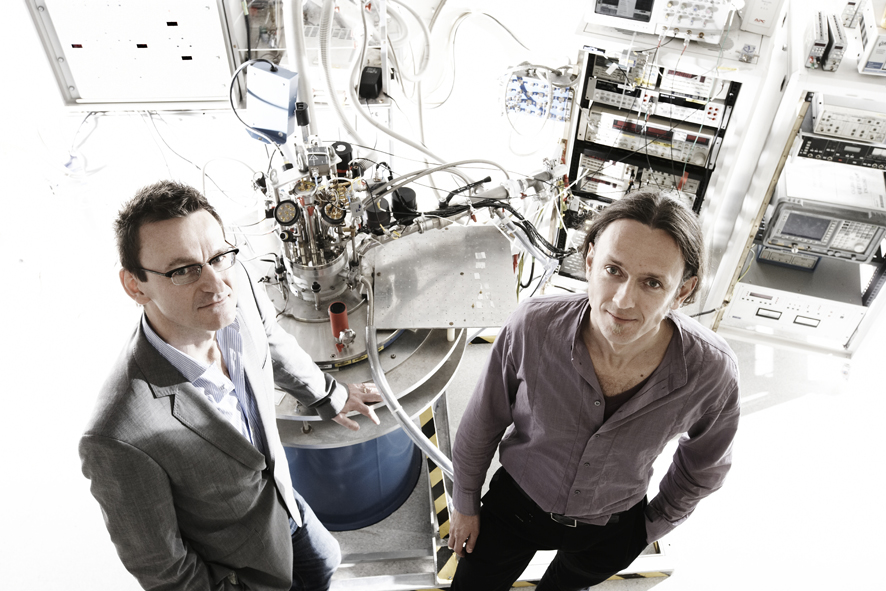
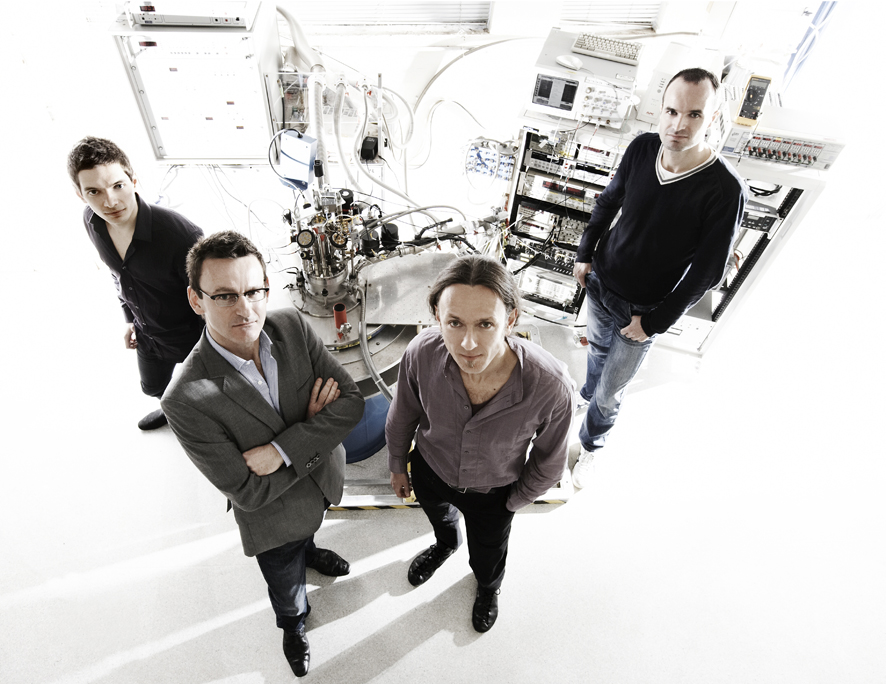
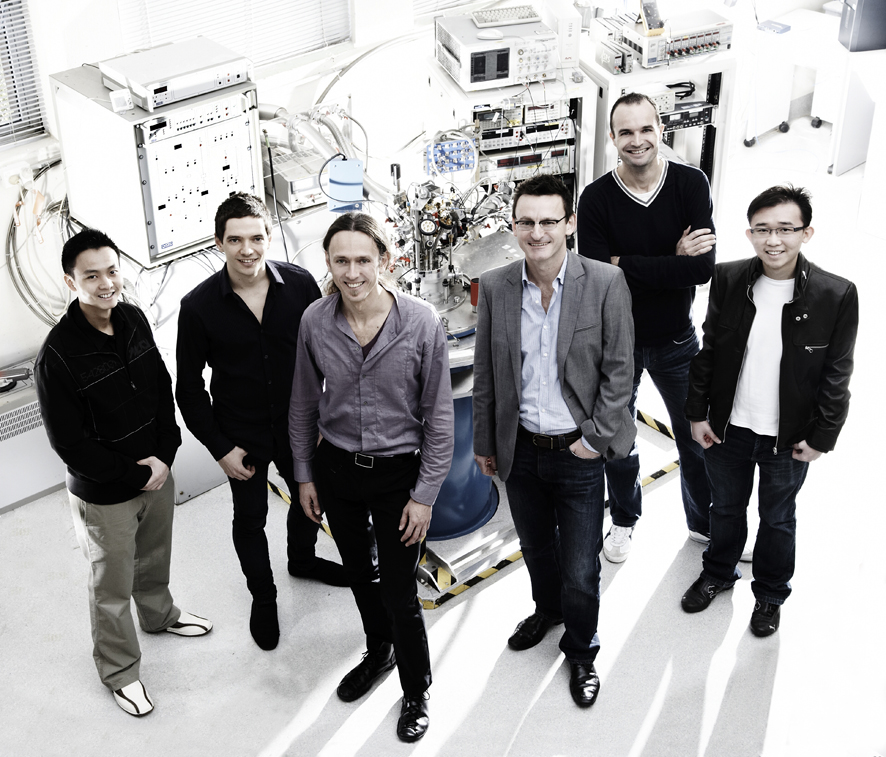
Project leaders Andrew Dzurak (left) and Andrea Morello. Credit: UNSW Core UNSW experimental team: (from left) Jarryd Pla, Andrew Dzurak, Andrea Morello and Floris Zwanenburg. Credit: UNSW
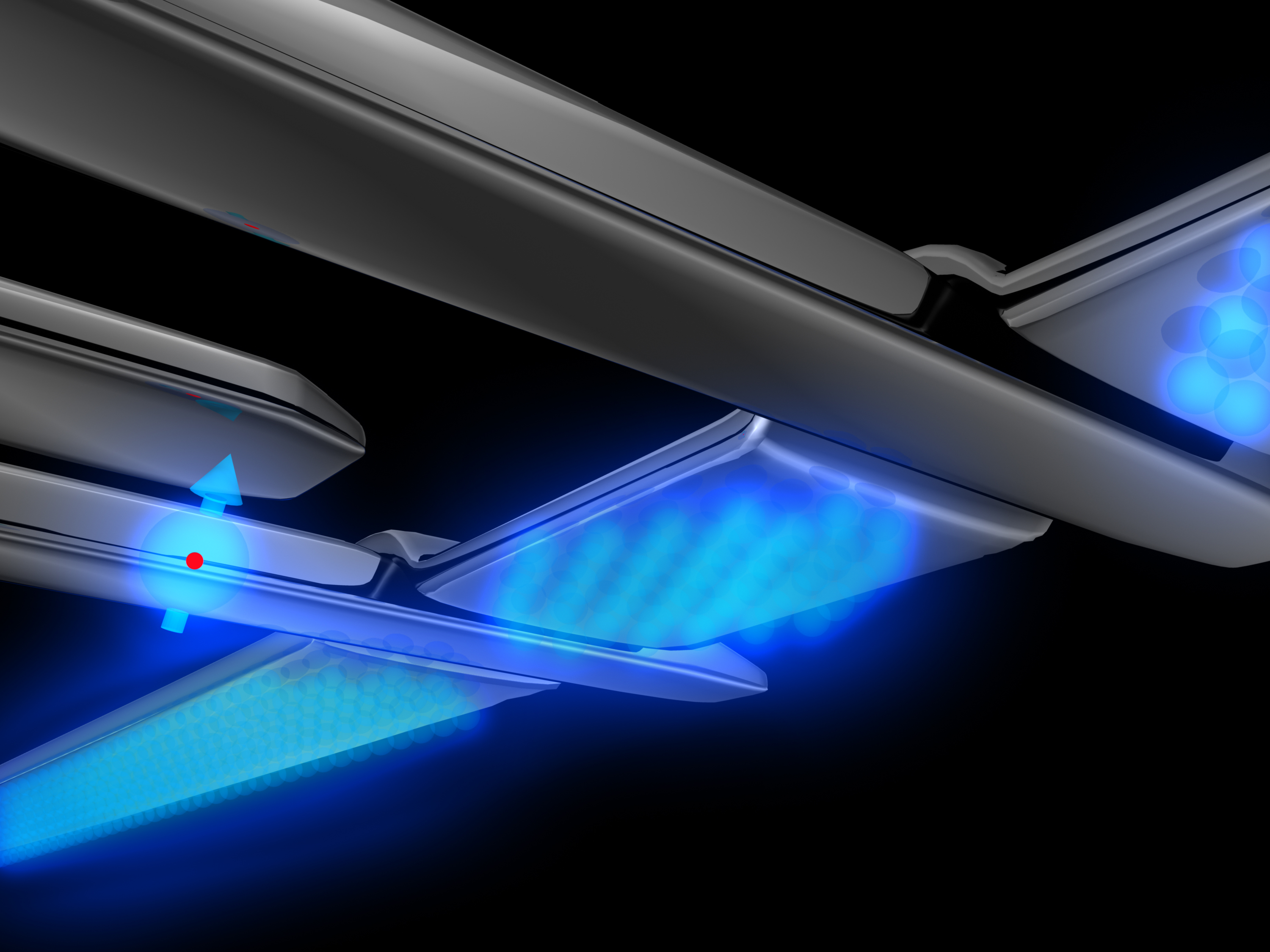
Artist’s impression of a phosphorus atom (red sphere surrounded by a blue electron cloud, with spin) coupled to a silicon single-electron transistor, to achieve single-shot readout of the phosphorus electron spin. Credit: William Algar-Chuklin, College of Fine Arts, UNSW.
5 March 2008 Four leading Australian and New Zealand scientists are in Paris from 5th of March for the 10th anniversary of the L’ORÉAL/ UNESCO For Women In Science program. They’re all available to discuss the latest developments in their research including: The secret of ageing – telomerase How cancer cells cheat death How the…
The first practical atom laser is a step closer today thanks to Australian researchers. The researchers have shown how to refuel the laser with ‘quantum foam’ allowing continuous operation. The results, reported today in Nature Physics, hold great promise for precision measurement in navigation, industry and mining and for fundamental tests of quantum mechanics.
The world’s fastest growing abalone—the tropical donkey’s ear abalone, Haliotis asinina—can be bred to grow rapidly and reliably for aquaculture, Queensland biologists have found. And that makes it potentially a high value alternative crop for struggling prawn farmers. The researchers looked at whether they could speed up breeding of abalone for aquaculture using modern technology…
Smarter air traffic control could save 500 kg of fuel and reduce airport noise by 35% for a typical Boeing 747 flight between Sydney and Melbourne according to a team of Canberra-based researchers.
The odds that a futuristic quantum computer will be built of silicon have received a boost, thanks to new technology recently invented by researchers in the Centre for Quantum Computer Technology (CQCT).